Quick answer
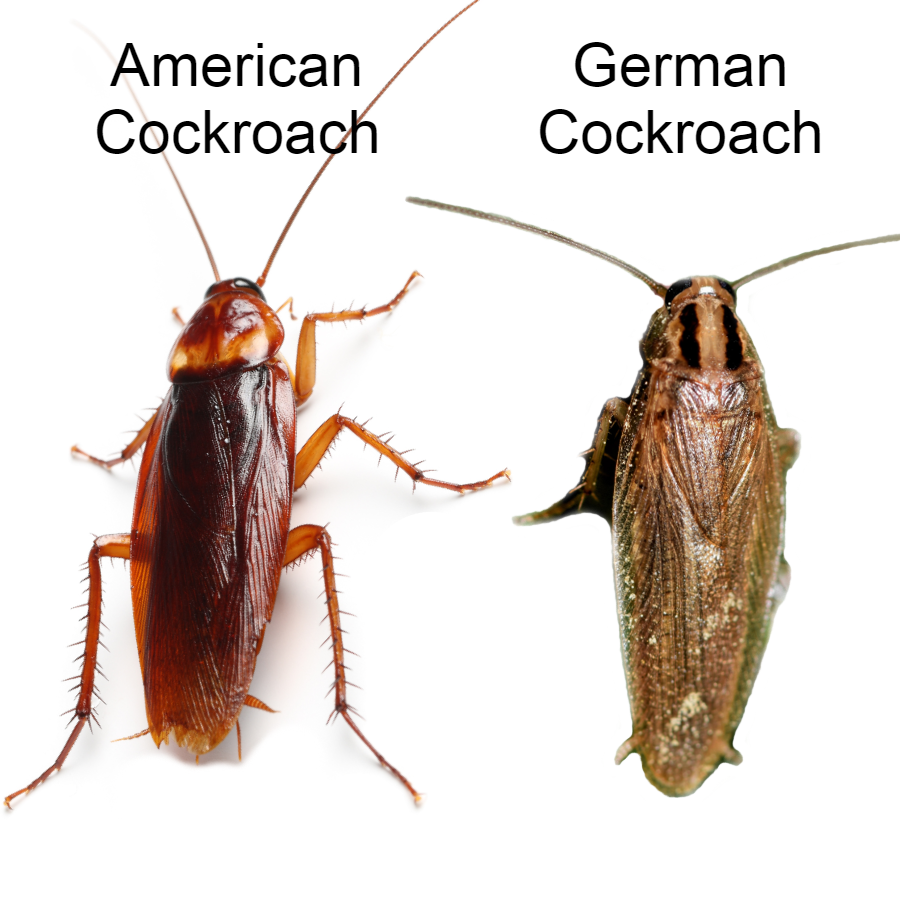
American cockroaches are large, reddish-brown roaches usually associated with sewers, drains, basements, crawlspaces, and other warm damp areas. German cockroaches are much smaller, tan to light brown, and have two dark parallel stripes behind the head. German cockroaches commonly reproduce inside kitchens and other occupied areas, so even one confirmed German cockroach deserves closer inspection.
Species identification changes the control plan. A large outdoor cockroach that wandered inside after rain is not managed the same way as a reproducing German cockroach population behind kitchen appliances. Size, markings, life stages, capture locations, and the building all help determine which problem is present.
Dixie Exterminators provides cockroach control in Marietta and Metro Atlanta. Save a sample or clear photograph and note the exact room, time, and location where it was found.
American vs. German Cockroach Comparison
| Feature | American cockroach | German cockroach |
|---|---|---|
| Adult size | Often about 1.5 inches long; one of the largest common structural roaches | Usually about one-half to five-eighths inch long |
| Color and markings | Reddish brown with a pale yellow margin on the shield behind the head | Tan to light brown with two dark parallel stripes behind the head |
| Typical habitat | Sewers, drains, basements, crawlspaces, boiler rooms, utility spaces, tree holes, and damp exterior sites | Kitchens, bathrooms, break rooms, appliances, cabinets, wall voids, and warm indoor equipment |
| How it enters | May move through drains, doors, foundation gaps, utility routes, or from damp outdoor harborages | Often transported in boxes, bags, used appliances, furniture, or moves between attached units |
| Infestation pattern | May live in lower or utility areas and occasionally wander into occupied rooms | Lives and reproduces close to people, food, water, and heat |
| Control emphasis | Drain and moisture investigation, exclusion, exterior harborage, monitoring, and targeted treatment | Detailed indoor inspection, sanitation, dense monitoring, bait placement, resistance-aware treatment, and follow-up |
How to Identify an American Cockroach
Adult American cockroaches are large and reddish brown. The pronotum—the shield-like area behind the head—has a lighter yellowish edge. Adults have fully developed wings, although indoor sightings often involve running rather than sustained flight.
Nymphs are smaller and lack full wings. They may be confused with other large cockroach species, including smoky brown and Oriental cockroaches. Location helps: captures in a sewer-connected drain, damp basement, boiler room, crawlspace, or utility tunnel support a different investigation from captures inside kitchen cabinets.
Common American cockroach locations
- floor drains and plumbing chases;
- sewer or utility access areas;
- basements, crawlspaces, and mechanical rooms;
- laundry, boiler, and commercial kitchen utility areas;
- tree holes, mulch, storm drains, and damp debris near buildings;
- lower floors of large or older buildings.
A single American cockroach in a living room after a storm can be an intruder. Repeated captures, nymphs, egg cases, or activity around drains suggest a nearby breeding or harborage site that needs investigation.
How to Identify a German Cockroach
Adult German cockroaches are small, tan to light brown, with two dark stripes running lengthwise on the pronotum. Nymphs are darker and may show a lighter central stripe. Their small size lets them hide in narrow cracks around hinges, appliances, cabinets, and equipment.
German cockroaches are strongly associated with human buildings and do not typically arrive as outdoor seasonal wanderers. One German cockroach in a kitchen, a small nymph, or a female carrying an egg case is more concerning than one large outdoor species near an exterior door.
Common German cockroach locations
- behind and beneath refrigerators, stoves, dishwashers, microwaves, and coffee equipment;
- inside cabinet hinges, drawer slides, electrical equipment, and wall gaps;
- around sinks, plumbing penetrations, leaks, and warm motors;
- break rooms, food storage, commercial kitchens, and vending areas;
- shared walls, utility chases, and neighboring apartments;
- cardboard boxes, grocery bags, used appliances, and transported items.
Egg Cases and Reproduction
Both species produce egg cases called oothecae, but their behavior differs. Female German cockroaches carry the egg case protruding from the abdomen until shortly before hatch. That protects the developing eggs and helps explain how one transported female can establish activity in a new location.
American cockroaches typically deposit egg cases in protected areas near food or moisture. Reproduction is generally slower than German cockroaches, but a warm sewer, utility space, or commercial building can support a persistent population.
Why German Cockroaches Are Often Harder to Eliminate
German cockroaches reproduce quickly, occupy numerous narrow harborages, and can spread through connected units or transported items. Populations may also show behavioral or physiological resistance to commonly used insecticides.
Control usually requires:
- many well-placed monitors to map activity;
- cleaning grease, crumbs, spills, and competing food;
- repairing leaks and reducing clutter and cardboard;
- small, fresh bait placements near harborages rather than a few large placements;
- avoiding sprays and cleaners that contaminate or repel cockroaches from bait;
- follow-up to replace consumed or dried bait and adjust from captures;
- coordination across attached units when movement between them is possible.
Seeing fewer adult cockroaches does not prove the population is eliminated. Nymph captures and fresh fecal spotting are important follow-up evidence.
Health and Indoor-Air Concerns
Cockroach body parts, saliva, and waste can contribute to allergens and asthma symptoms in sensitive people. Cockroaches can also contaminate food and food-contact areas as they move through unsanitary sites.
CDC guidance for asthma control emphasizes removing food and water, cleaning crumbs and spills, storing food and trash in closed containers, sealing cracks, and avoiding sprays and foggers that may trigger asthma. Speak with a healthcare professional about symptoms; pest identification cannot diagnose an allergy or illness.
What Homeowners Can Check Safely
- Place sticky monitors against walls and near suspected harborages, away from children and pets.
- Label each monitor with location and date.
- Photograph or save specimens for identification.
- Check for fecal spotting, egg cases, shed skins, leaks, grease, crumbs, and cabinet gaps.
- Inspect boxes and used appliances before bringing them inside.
- Record whether sightings occur during the day, at night, after rain, or near drains.
Daytime German cockroach activity can suggest crowding or a large population, but lighting, disturbance, and food also affect movement. Use it as one severity clue, not a population count.
What Not to Do
- Do not use total-release foggers; they rarely reach narrow harborages and can create exposure or fire hazards.
- Do not spray over gel bait or place bait on recently sprayed or heavily cleaned surfaces.
- Do not assume one large outdoor cockroach proves a German cockroach infestation.
- Do not move an infested appliance to another room or building without containment and a plan.
- Do not leave pet food, grease, crumbs, standing water, or open trash available overnight.
- Do not seal shared-wall pathways until the population and treatment plan have been evaluated; poor sequencing can shift activity.
What a Professional Inspection Should Determine
The inspection should identify the species and life stages, map activity, locate food and water, evaluate drains and entry routes, review attached units or transported-item risks, and note previous sprays or baits. The recommendation should explain sanitation, exclusion, monitoring, treatment, resident preparation, and follow-up.
The broader cockroach infestation guide covers fecal spotting, odor, egg cases, severity clues, and prevention across species.
Frequently Asked Questions
Which is larger, an American or German cockroach?
American cockroaches are much larger, often around 1.5 inches long as adults. German cockroaches are usually about one-half to five-eighths of an inch long.
Which cockroach is more likely to infest a kitchen?
German cockroaches are strongly associated with kitchens, food-preparation areas, appliances, cabinets, and other warm indoor harborages near food and water.
Can American cockroaches live indoors?
Yes. They may occupy sewers, basements, crawlspaces, utility rooms, boiler areas, and other warm, damp sites, then move into living areas through drains or structural openings.
Why are German cockroaches difficult to eliminate?
They reproduce rapidly, hide in narrow spaces, spread through shared walls and transported items, and may be resistant to some insecticides. Control requires detailed placement, sanitation, monitoring, and follow-up.
Should I use a fogger for cockroaches?
Foggers rarely reach the narrow harborages where cockroaches live and can create exposure or fire hazards. Identification, sanitation, exclusion, monitoring, and precisely placed products are more useful than indiscriminate treatment.
The Right Cockroach Plan Starts With Identification
Dixie Exterminators serves Marietta and much of Metro Atlanta. An inspection can determine which cockroach is present, where it is harboring, how it is entering or spreading, and which sanitation, exclusion, monitoring, and treatment steps fit the species.
Authoritative Resources
These primary and professional sources informed the safety, identification, and prevention guidance on this page: